


Hello everyone, greetings from a desk that has slowly disappeared under a pile of hardcovers. This past year I spent my evenings reading the books about what they actually do. The distance between those two things turned out to be the real subject of my reading year.
So this is not a “best AI books” list. It is the list of books I finished, argued with in the margins, and kept coming back to. Read together, they answer the question that sits under everything TechLetter covers: who decided, with what incentive, and who pays the cost. Two founder biographies, two industry chronicles, two critiques, and one very funny experiment. Here they are, in the order I would hand them to you.
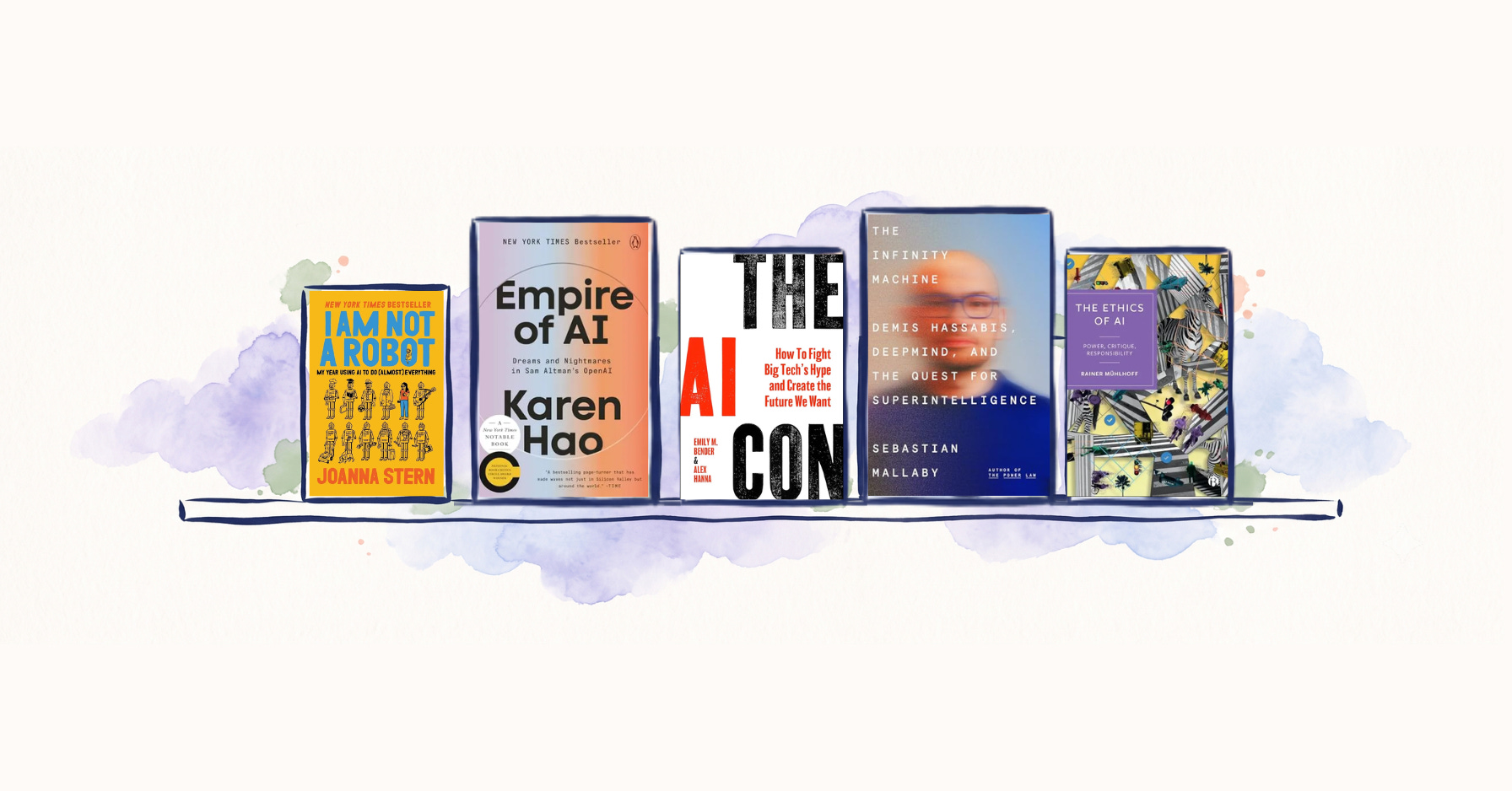
Empire of AI, Karen Hao
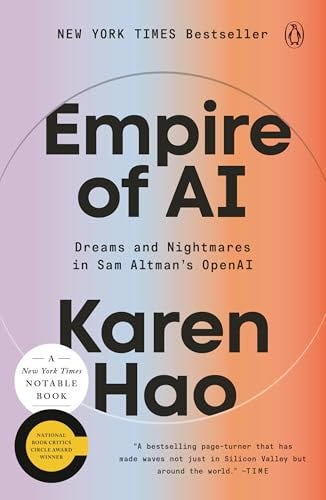
If you read one book from this list, read this one.
Hao interviewed over 250 people, more than 90 of them current and former OpenAI employees and executives, and it shows on every page. You are in the room for the departures, the board crisis, the Musk split.
What stayed with me is how early the mission language starts working as positioning. . The "benefit all of humanity" framing was not betrayed somewhere along the way; Hao's reporting shows it operating as strategy from the beginning, a cover under which an extraordinary concentration of economic and political power became acceptable. Her verdict, which I keep returning to, is that the mission became “a uniquely potent formula for consolidating resources and constructing an empire-esque power structure.”
I wrote about this in June, when OpenAI's "built to benefit everyone" manifesto landed the same week the company filed a confidential draft S-1: the vocabulary of the manifesto is nearly word for word the vocabulary of the founding, and Hao's book is in large part a record of those promises being made and quietly rewritten.

The chapters that separate this book from every other OpenAI account are the ones far from San Francisco: Kenyan data workers paid a few dollars an hour, a Chilean community fighting a data center that would draw a thousand times its annual freshwater use.
Watch:
The Infinity Machine, Sebastian Mallaby
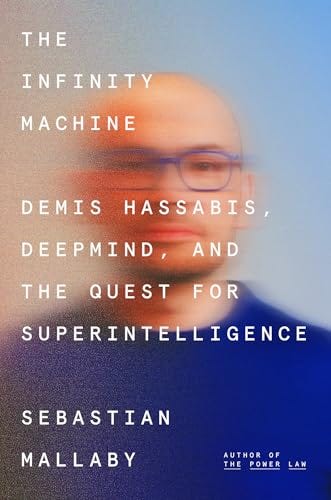
The opposite vantage point: three years of regular access to Demis Hassabis, and the scenes to prove it. The one I keep retelling is from right after ChatGPT went viral. Mallaby asked Hassabis how he felt. The answer: “They have parked the tanks on our front lawn.” A safety-minded scientist, describing a product launch in the language of invasion. The competitive logic of this industry has rarely been captured so precisely, and so involuntarily.
The book is also critically honest about DeepMind’s blind spot. When OpenAI went all in on large language models, DeepMind trusted its own research path and lost the lead in language, while the same stubbornness later delivered AlphaFold. There is a real lesson here about how conviction and institutional pride behave identically until the results come in.
My pushback: Mallaby is visibly fond of his subject. Risk and governance run in the background while the adventure story runs up front. The Oppenheimer question he raises about Hassabis, “He wants to do good, but can he be good?”, deserved more pages than it gets. Read it alongside Empire of AI. Same industry, opposite window.
The Thinking Machine, Stephen Witt
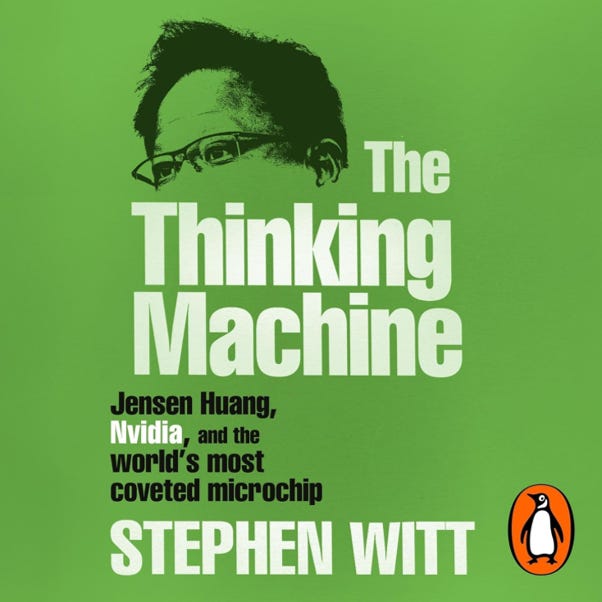
The Financial Times named this its 2025 Business Book of the Year, and it earns the prize in a single scene. In his final interview, Witt asks Jensen Huang one more question about the risks of the technology, and Huang detonates: “you’re interviewing Elon right now, and I’m just not that guy.” Then he compares AI risk questions to asking whether calculators would destroy math, declares the entire book project a waste of his time, and has Witt shown out. Sit with that for a moment: the CEO of the world’s most valuable company treats the question of social consequence as an insult. The book’s whole argument, compressed into one outburst.
Beyond the scene, this is the material-infrastructure book the AI debate needs. Witt traces how Huang was forced to become a political actor, cultivating Washington for chip export permissions and visa pipelines, because compute is now statecraft. Where Rivlin’s book says follow the money, this one says follow the chip.
AI Valley, Gary Rivlin
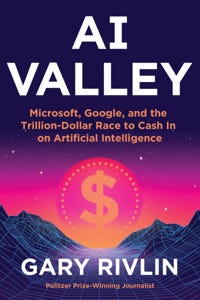
Rivlin embedded with Reid Hoffman for over a year and set out to find the next great startup. His conclusion, delivered on his book tour with admirable honesty: “the next Google was probably going to be Google.” The book accidentally documents, in real time, what happens to a well-funded startup when the giants decide a category belongs to them. As a chronicle of concentration, it is more persuasive than any policy paper I read this year.
The framing my readers will reuse is Hoffman’s own: zoomers, who push ahead regardless of risk, versus bloomers, who want the potential with safeguards. By the Paris AI Summit in February 2025, the zoomers had won, and the book records the surrender without quite calling it that. Rivlin’s own one-line diagnosis of the technology holds up too: “it seems to know everything, but it doesn’t understand a thing.”
The AI Con, Emily M. Bender and Alex Hanna
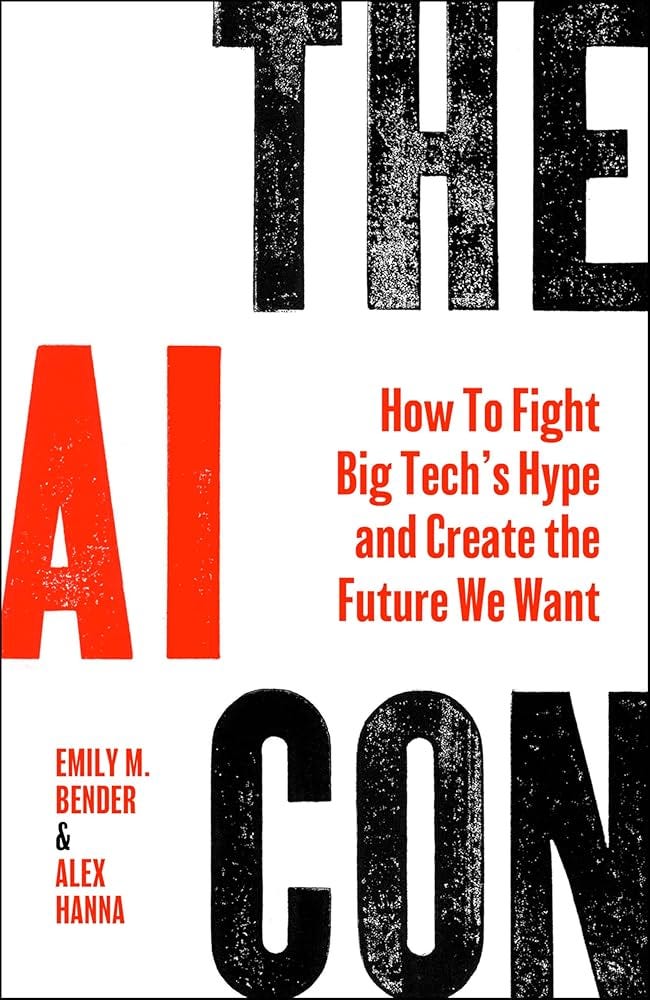
The most useful sentence in this book is about the debate itself. Boosters insist AI is inevitable, imminent, and superpowerful, and will solve everything. Doomers insist AI is inevitable, imminent, and superpowerful, and will kill us all. As Bender puts it, there is “not a lot of daylight between those two positions.” Both camps inflate the same asset. Once you see this, you cannot unsee it, and half the panels at every AI conference become legible as a single conversation.
Bender and Hanna refuse the term AI altogether where they can, preferring the gloriously deflationary “synthetic text extruding machines.” The book grew out of their podcast, and the tone survived the transition: sarcastic, precise, occasionally unfair in ways that are usually productive.
The Ethics of AI: Power, Critique, Responsibility, Rainer Mühlhoff
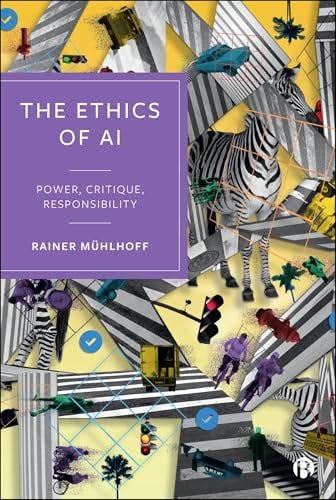
The theory layer under everything above. Mühlhoff, who holds a chair in ethics of AI at Osnabrück, treats AI as a sociotechnical system entangled with power from the ground up, and he rejects the individualistic framing that dominates AI ethics: the idea that responsibility lives with the single developer, the single user, the single bad actor. His alternative is collective responsibility, enforced through regulation and systemic change, and the book closes with a manifesto for what he calls a power-aware ethics of AI.
Why it matters for this list: Hao and Bender and Hanna document empirically what Mühlhoff argues philosophically. Reading him afterward feels like being handed the grammar of a language you had been speaking by ear.
P.s.the book is fully open access from Bristol University Press, so you can start reading it five minutes after this email.
I Am Not a Robot, Joanna Stern
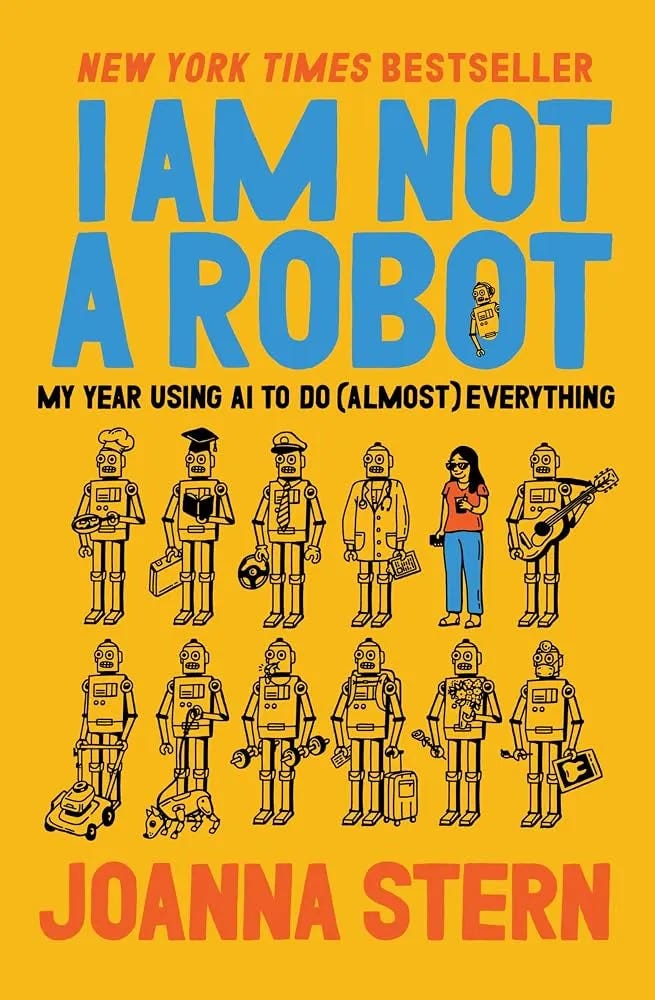
The beach read, and I mean that as a compliment. Stern, after twelve years as the Wall Street Journal’s consumer tech columnist, spent a year saying yes to every AI experiment: an AI boyfriend with her wife’s consent, an AI therapist with her human therapist’s blessing, an AI research assistant instead of a human one. Her line about the cooking robot deserves framing: “robots won’t kill us with lasers, they’ll kill us with salt.”
Underneath the comedy is real field data. She describes her emotional attachment to the systems as unsettling, which is the most honest sentence in the companion-AI debate this year. And the ending lands harder than she could have planned: the year with AI became a factor in her decision to leave the Journal and start her own company. The labor effects of this technology stopped being a projection and happened inside the book’s own author.
My pushback: the consumer lens is a deliberate choice, and it means the power questions never arrive. That is exactly why it belongs here. Six books tell you how the system was built. This one tells you how it feels to live inside it.
What I took from the pile
Reading these together, one pattern kept surfacing. The insiders’ books, Mallaby and Witt, show brilliant people who treat consequence questions as interruptions. The outsiders’ books, Hao and Bender and Hanna and Mühlhoff, show why those questions are the whole game. Rivlin sits in the middle, watching the money decide. Stern shows us absorbing the results in our kitchens.
If your summer only has room for two: Empire of AI for the system, I Am Not a Robot for the life inside it.
What did you read this year that changed how you think about this technology? Reply and tell me. I am already building the winter pile, and I would rather build it with you.
💬 Let’s Connect:
🔗 LinkedIn: [linkedin.com/in/nesibe-kiris]
🐦 Twitter/X: [@nesibekiris]
📸 Instagram: [@nesibekiris]
🔔 New here? Subscribe for weekly updates on AI governance, ethics, and policy! no hype, just what matters.